About Pyxie
Why We Built Pyxie: Better Infrastructure for In-Home Childcare
The Pyxie team9 min read
If we want better outcomes for children, we have to better support the adults caring for them.
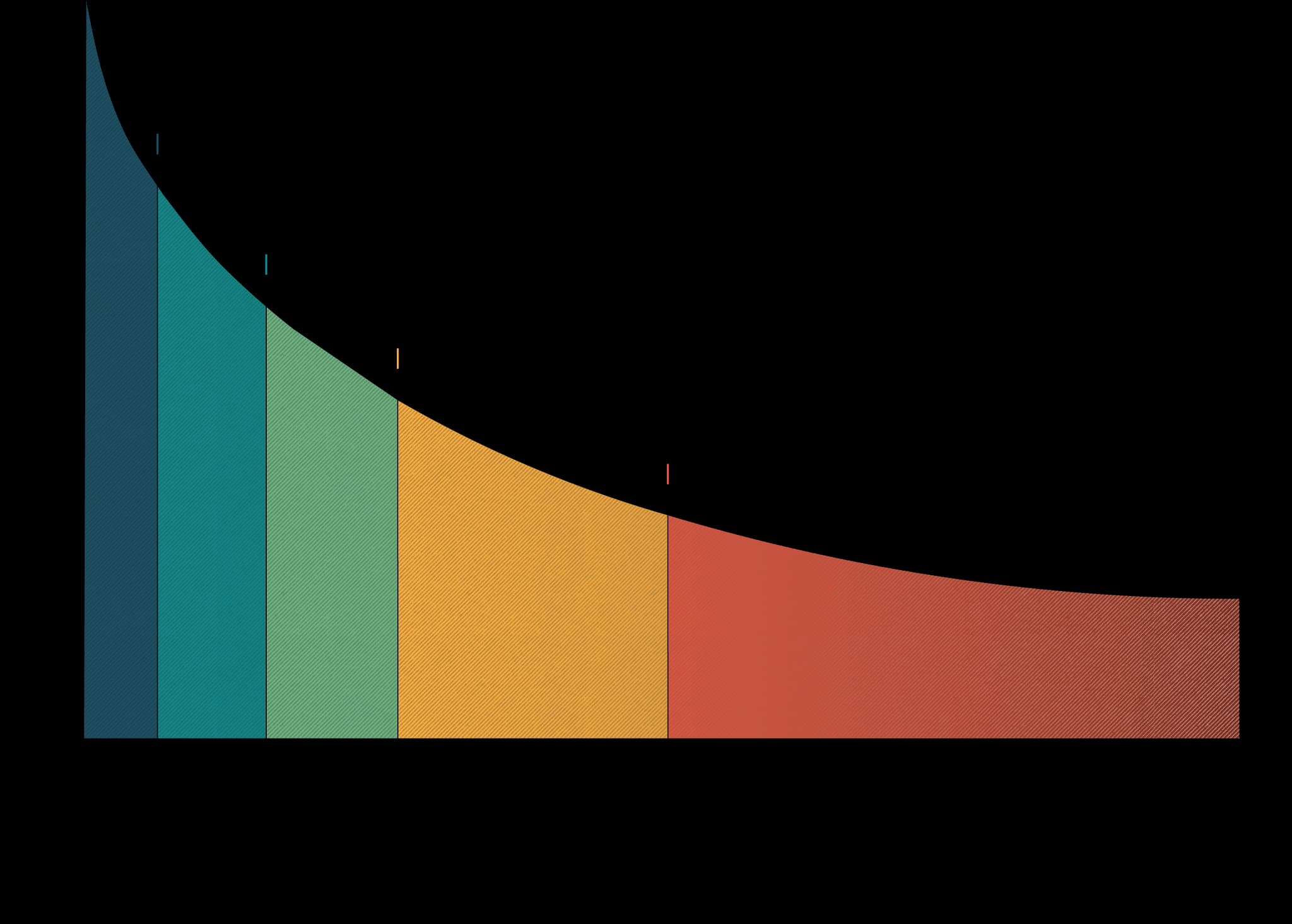
The first years of a child's life are extraordinarily important. Nobel laureate James Heckman and his colleagues found that high-quality birth-to-five programs deliver a 13% per child, per year return on investment through better outcomes in education, health, employment, and social behavior, a rate substantially higher than programs starting at age three or four.
During those years, care is rarely provided by one person alone. Parents, nannies, au pairs, newborn care specialists, grandparents, teachers, and other trusted adults all become part of the ecosystem surrounding a child. In-home care is a meaningful part of that picture, and a growing one for working families. The 2024 National Survey of Early Care and Education found that 27% of parents earning at or above 120% of their area's median income employed a nanny for a child under age three.
Yet most of the systems we've built around early childhood focus on the child or on access to childcare. Far less attention has been paid to something happening one layer up: How do we equip all of those adults to provide great care together?
Care is skilled work. We should build systems that treat it that way.
For millions of families, hiring an in-home caregiver is essential infrastructure that makes work and family life possible. But the systems surrounding that relationship are surprisingly informal.
A parent hires a nanny and, often for the first time, becomes an employer. They are suddenly responsible for onboarding, communicating expectations, giving feedback, navigating changes, and creating the conditions for someone else to succeed at an enormously important job.
The caregiver steps into a private home carrying significant responsibility for a child's safety, development, routines, and emotional well-being, often without the onboarding, professional development, shared systems, or support structures that exist in other workplaces.
Both sides are expected to figure it out, and the consequences reach well past an awkward working relationship. When care arrangements break down, parents' work is disrupted. ReadyNation estimates that the infant and toddler childcare crisis costs $122 billion each year in lost earnings, productivity, and tax revenue, with families absorbing $78 billion of that in forgone earnings and job search costs. Caregivers lose income and professional continuity. And children experience changes in the adults, routines, and relationships that make up their everyday lives, which the developmental research consistently identifies as the thing worth protecting. Continuity with a consistent, responsive caregiver is associated with secure attachment, stronger self-regulation, and fewer behavioral difficulties, while the loss of a caregiver a child has bonded with is associated with setbacks in social and emotional development.
After hundreds of conversations with professional caregivers, we have come to understand that great care is the result of years of expertise, intentional systems, and a great deal of invisible labor. The best caregivers keep learning and adapting. They build documents, routines, and processes that help a child thrive while fitting into the rhythms of a particular household. Much of that work happens in unpaid evening hours, and most parents have no idea it is happening at all.
We do not expect new hires in any other profession to succeed without onboarding, support, and clear systems. It is worth asking why we expect that of in-home caregivers, especially given what is at stake: a child's development during their most formative years, a family's stability, and the strength of the childcare workforce itself.
We believe a stronger care economy starts by building better infrastructure around the people doing the caring.
Our theory of change starts with the adults
Pyxie is grounded in a simple theory: When the adults caring for a child have better tools, knowledge, and support, they are better equipped to provide consistent, intentional, high-quality care.
- For families, that means having systems that help them become better employers and partners to the people they hire.
- For caregivers, it means having the information, resources, feedback, professional development, and recognition that skilled professionals deserve.
- For children, it means the adults around them are better able to work together, carry routines and developmental goals across environments, and respond as their needs change.
Over time, we believe those stronger relationships can contribute to something bigger: a more stable, respected, and professional in-home childcare workforce. That is the systems change we are working toward.
Why start with coordination?
Our first question was: What is the foundational infrastructure every family-caregiver relationship needs? Again and again, we came back to shared context.
A tremendous amount of knowledge has to move between the adults caring for a child: routines, allergies, emergency information, developmental priorities, parenting preferences, household expectations, observations, changes, and countless details that rarely fit neatly into a job description.
Today, much of that information lives in someone's head, a text thread, a note on the refrigerator, or several different apps.
Pyxie's first product centers around a living Care Manual that families and caregivers build and maintain together. Families capture the information that matters to caring for their child. Caregivers can review it and add their own knowledge. Short check-ins help both sides keep that shared understanding current as children, routines, and relationships evolve. And Ask Pyxie helps caregivers quickly access information already contained in their family's Care Manual.
But our hypothesis extends well beyond documentation. Better coordination can create stronger working relationships. Stronger relationships can create more stable care. And over time, the information and infrastructure created through those relationships can help us build better systems for the childcare workforce itself.
From a Care Manual to care infrastructure
Today, very little of the knowledge created through in-home childcare follows either the child or the caregiver.
A caregiver may spend years developing expertise without a meaningful professional record of that experience. A family may develop a rich understanding of how best to support their child, only to reconstruct it when a new caregiver arrives. Training, payroll, benefits, developmental resources, and employment often sit in completely separate systems.
We believe there is an opportunity to create a shared layer connecting more of that ecosystem. Over time, Pyxie could help caregivers build evidence of their skills and experience, access professional development, and carry that professional identity forward. Families could have better tools for employing, developing, and retaining great caregivers. And the broader organizations supporting care, from agencies and training providers to payroll, benefits, and early-childhood resources, could operate from a more connected foundation.
The coordination layer helps build trust. Trust allows useful knowledge to accumulate. That knowledge can become infrastructure for a profession.
We are beginning with one relationship at a time, but we are building toward a care economy where in-home caregivers are recognized and supported as the skilled professionals they already are.
How we got here
Pyxie grew out of several threads in co-founder Jenna Winocur's work. Much of Jenna's career has focused on systems that disproportionately affect women but have historically been overlooked by traditional investment and innovation.
During her master's at the Harvard Graduate School of Education, she began studying the early-childhood and childcare workforce more deeply. She later worked on caregiver training in South Africa, where she saw the opportunity that comes from investing in the knowledge and professional development of the people caring for young children.
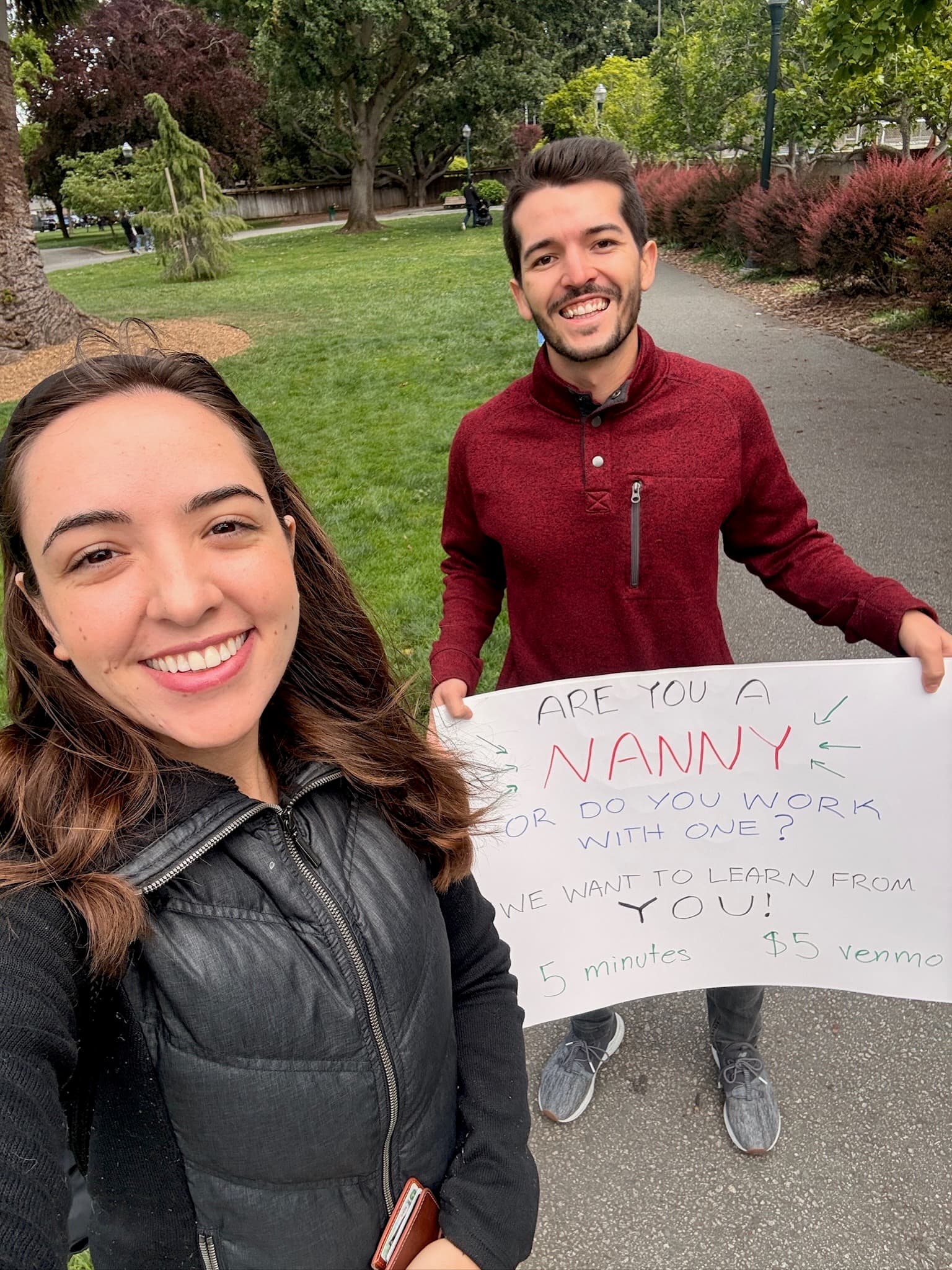
As the idea for Pyxie began to take shape, our team spoke with hundreds of parents, caregivers, agency leaders, and other childcare professionals to better understand where the existing care system was falling short. Jenna eventually began working as a nanny herself, adding firsthand experience to that research.
She was joined by Evan Austin, a close friend from Cornell and now Pyxie's Technical Co-Founder. Evan had begun building software solutions alongside the communities he served while in the Peace Corps, and started supporting Jenna on Pyxie as he finished his service. In January 2026, he joined the company as a full co-founder, bringing both technical expertise and a shared commitment to building technology in close partnership with the people it is meant to serve.

Across all of those experiences, one thing became increasingly clear: exceptional caregiving requires judgment, expertise, patience, planning, communication, and an enormous amount of invisible work. Pyxie is being built around the belief that technology should make that work easier to do well, and help ensure the people doing it are valued accordingly.
Building with the people closest to care
That belief also shapes how we're building Pyxie. Parents and professional caregivers have been involved from the beginning through interviews, workshops, product testing, and co-design. We have a caregiver advisory board that actively shapes the product, and we're now recruiting families and caregivers to help us test and improve the platform in real care relationships.
We are also being deliberate about the role of AI. Care happens through human relationships. We want AI to reduce administrative burden, make useful knowledge easier to access, and help people act on good information. We are building around privacy, consent, transparency, and respect for caregiver expertise as core product principles.
There is still a lot we don't know. That's why we are building in public and inviting the people who will ultimately use Pyxie to help shape it.
Our north star
Our mission is to equip the adults who care for children with the tools, knowledge, and support they need to provide exceptional and consistent care, and equip families to better support and develop the people they employ.
Our vision is a stronger, higher-quality, more resilient care economy: one where caregivers are valued as skilled professionals, families are supported as employers and partners, and every child has access to adults who are equipped to help them thrive.
For us, systems-change starts inside the home, with the relationship between the adults responsible for one child.
Why Pyxie?
Our name comes from Pyxis, the constellation of the compass. It represents the idea of a shared north star.
Every child, family, and caregiver is different. We aren't trying to prescribe one right way to care. We want to give the adults surrounding a child better tools to establish what matters to them, learn from one another, and move in the same direction.
And we kept a little of the pixie in Pyxie because childhood deserves some magic, too.
We're at the beginning of this journey. If you're a parent, nanny, au pair, newborn care specialist, agency, early-childhood professional, researcher, or someone else working to build a better care economy, we'd love for you to be part of it.

It takes a village to raise a child. We're building better infrastructure for the adults who make up that village.
Sources
- Heckman, J., García, J.L., Leaf, D.E., and Prados, M.J. The Lifecycle Benefits of an Influential Early Childhood Program. Center for the Economics of Human Development, University of Chicago, 2016. heckmanequation.org
- U.S. Bureau of Labor Statistics, Employment in childcare and early education in the United States, 2000 to 2023, Monthly Labor Review, 2026, citing the 2024 National Survey of Early Care and Education. bls.gov
- Economic Policy Institute, Domestic Workers Chartbook 2022. epi.org
- ReadyNation, Council for a Strong America, $122 Billion: The Growing, Annual Cost of the Infant-Toddler Child Care Crisis, January 2023. strongnation.org
- Horm, D., et al., Associations between continuity of care in infant-toddler classrooms and child outcomes, Early Childhood Research Quarterly, 2018; and Phillips, D., et al. on caregiver loss and social-emotional outcomes. sciencedirect.com